How to count larvae
The four ways hatcheries count larvae, how to do each one well, and where each one goes wrong.
Why the count matters
Stocking density, feed rations, survival and the price of a batch all start from how many larvae you have. A count that is off by a fifth puts every decision after it off by a fifth too.
1. Count the whole sample by hand
Pour the sample into a dish or onto a counting plate and count every larva, under a stereo microscope or a magnifier for small ones. A tally counter and a grid under the dish help you keep track of where you are.
It is the most direct method, and the slowest. It suits small batches and trials. For a tank of hundreds of thousands of larvae, you count a sample and scale up instead.
2. Count a subsample and scale up by volume
This is the everyday method in most hatcheries:
- Mix the tank, bucket or sieve contents gently but thoroughly, so the larvae are spread evenly through the water.
- Take several subsamples of a known volume, from different points, while the water is still moving.
- Count the larvae in each subsample.
- Average the counts, divide by the subsample volume and multiply by the total volume.
- Compare the subsamples. If they differ a lot, mix again and resample before trusting the result.
Example: three 10 mL subsamples from a 200 L tank hold 52, 47 and 55 larvae. The average is 51.3 larvae per 10 mL, or 5.13 per mL. 5.13 × 200,000 mL gives about 1.03 million larvae in the tank.
Every larva counted in the subsamples stands for thousands in the tank, so a small counting error grows with the scale-up. More subsamples, and the same person or method each time, keep the result steady.
3. Count by weight
For bigger animals such as shrimp post-larvae, spat and juveniles, some hatcheries count by weight: drain and weigh a small group, count it, work out the number per gram, then weigh the whole batch and multiply.
It is fast, but it assumes every animal weighs about the same. Mixed sizes and water left on the animals both skew the result, so check it against a direct count from time to time.
4. Count from a photo
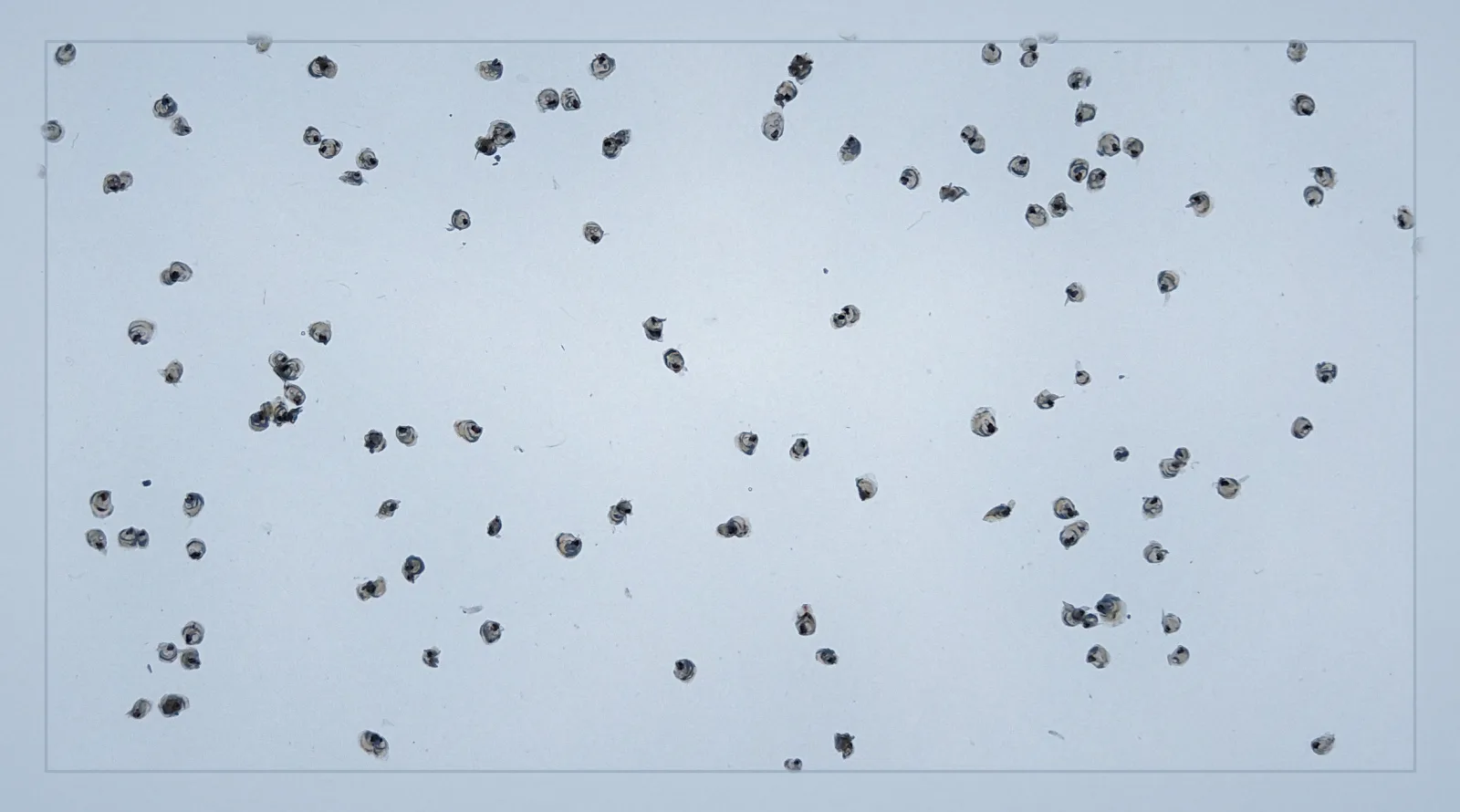
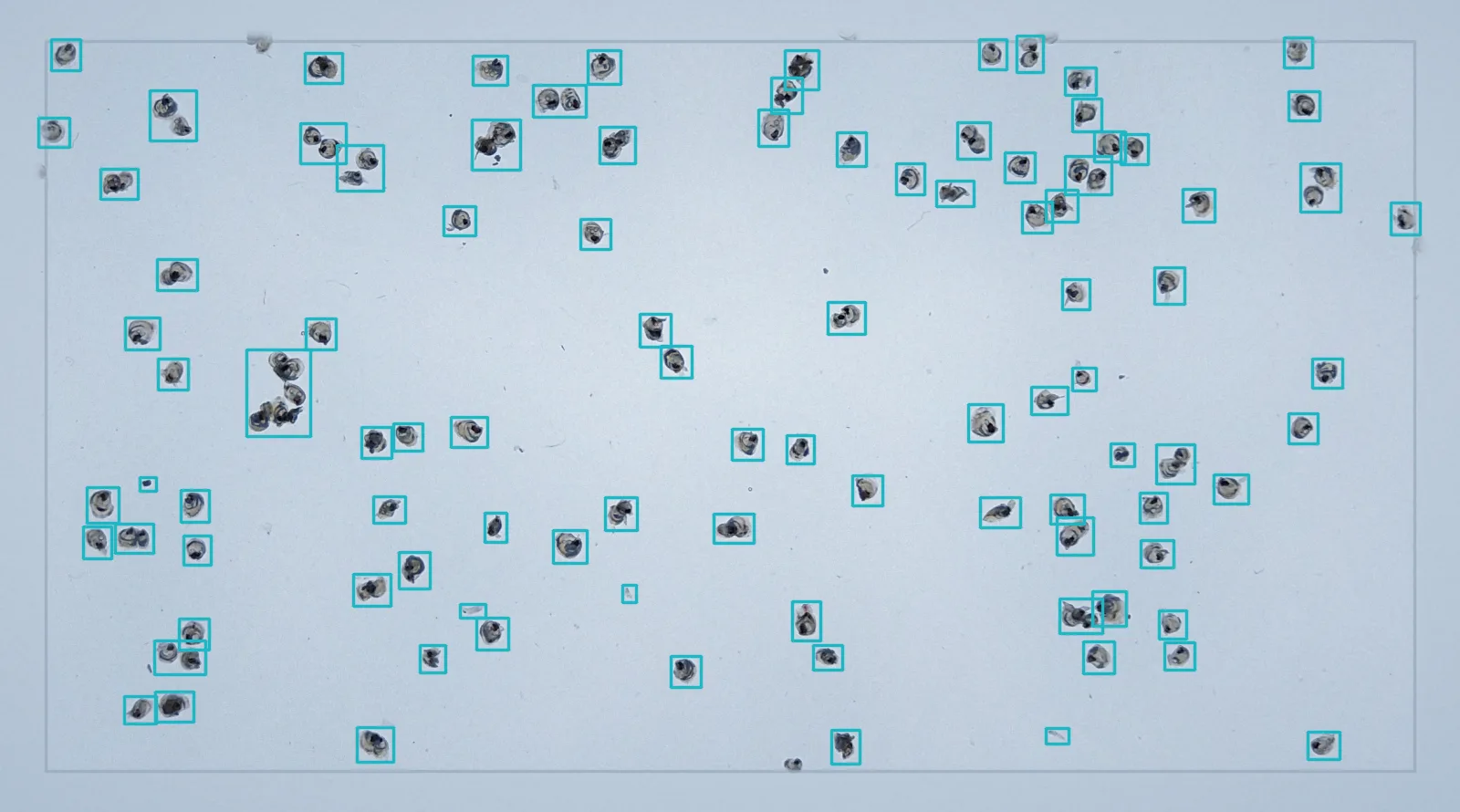
Image-based counting replaces counting by eye: you photograph the subsample, and software finds and counts every larva in the image. The subsampling still matters, but the counting step no longer depends on who is counting or how tired they are, and every count is kept with its image.
OXYGEN, our counting platform, works this way. It counts from a photo taken with a phone or a camera, and keeps each count on record from stocking to transfer.
Common mistakes
- Sampling before the water is well mixed. Larvae settle, clump or swim towards the light, so a still tank is not an even one.
- Taking a single subsample. With one, you cannot see when the count is off.
- Counting debris, empty shells or dead larvae as live ones.
- Counting for too long. Attention drops after a few samples, and the counts drift with it.
- Comparing counts made by different people with different methods. Two people counting the same sample rarely agree.
Counting by species
What changes from one species to the next is the stage you count, the size of the sample and what you do with the number. Our pages by species: